
You’ve considered your options, imagined different outcomes, and perhaps asked people you trust for advice. Yet every time you think you’re ready to choose, another question appears. What if you regret it? What if you’re overlooking something important? What if the other option turns out to be better?
The fear of making the wrong decision can leave you caught between wanting to move forward and worrying about what might happen next. But making a thoughtful choice doesn’t require you to predict the future. It requires understanding what’s holding you back, recognizing what matters most, and learning to trust your ability to respond to whatever comes next.
Why the Fear of Making the Wrong Decision Feels So Overwhelming
Some decisions deserve careful consideration because their consequences can significantly affect our lives. Changing careers, ending a relationship, or making a financial commitment naturally involves uncertainty. Taking these choices seriously is not a sign of weakness.
Sometimes, however, the fear goes beyond the decision itself. You may worry that making a mistake will mean you’ve failed, disappointed someone, or proven that you cannot trust your own judgment. Past experiences, criticism, or painful disappointments can make the possibility of choosing incorrectly feel especially threatening.
The fear of regret can also keep you searching for guarantees. You imagine how your future self might feel if things don’t work out, hoping that enough preparation will protect you from disappointment. While considering possible consequences is useful, trying to eliminate every risk can make even reasonable choices feel impossible.
Recognizing these patterns helps you understand an important distinction: sometimes you need more information, and sometimes you need to change how you’re approaching uncertainty.
When Careful Thinking Becomes Second-Guessing
Thoughtful reflection helps you evaluate options, consider consequences, and clarify priorities. Second-guessing often brings you back to the same concerns without providing anything new.
Imagine you’re considering applying for a new job. You’ve reviewed the requirements and know the opportunity aligns with your interests. But instead of taking the next step, you begin imagining rejection, questioning your abilities, and asking others whether they think you should apply. Even when they encourage you, the uncertainty remains.
At this point, the problem may not be insufficient information. You may be expecting yourself to feel completely confident before taking action.
A useful question is whether your thinking is helping you understand the situation or simply repeating fears you’ve already considered. If essential information is missing, gathering it makes sense. If you’ve already evaluated the relevant facts, repeatedly revisiting the same worries may only prolong your hesitation.
Seeking advice can be valuable, but it becomes less helpful when you depend on someone else’s approval to feel comfortable with your own choices. If you frequently worry about disappointing others, learning to set healthy boundaries without guilt can help you recognize when outside expectations are influencing your decisions.
The goal isn’t to stop considering other perspectives. It’s to give your own judgment a meaningful place in the process.
How to Make a Decision When You’re Unsure
When the fear of making the wrong decision feels overwhelming, the most helpful approach is often to organize what you know rather than continue imagining everything that could go wrong.
Begin by separating facts from assumptions. Write down what you know about your options, then identify the outcomes you’re imagining without supporting evidence. For example, knowing that a position requires certain qualifications is a fact. Assuming you’ll be rejected before applying is a prediction. Recognizing the difference helps you focus on information that can actually guide your decision.
Next, consider whether something important is missing. You may need to understand the financial implications, clarify a responsibility, or speak with someone who has relevant experience. Gathering necessary information is responsible. Continuing to research simply because you want a guarantee that nothing will go wrong is something different.
Then ask what matters most to you. Consider your values, priorities, responsibilities, and current circumstances. A choice that looks impressive to someone else may not support the life you’re trying to build. Returning to your own priorities can help you evaluate options without allowing external expectations to become the deciding factor.
If you’re struggling to identify what you need, taking time to reconnect with yourself through guided reflection may help clarify what matters during this season of your life.
Finally, choose one reasonable next step. That might mean requesting information, having an honest conversation, exploring an opportunity, or setting a realistic deadline for making your decision. Significant choices may require professional advice or additional planning, while smaller decisions may allow you to experiment before committing.
What matters is approaching the situation with appropriate care rather than demanding absolute certainty. A thoughtful decision is based on the information and circumstances available to you, not on a promise that the outcome will be perfect.

Learning to Trust Yourself After You Decide
Making a decision is only part of the experience. How you treat yourself afterward also influences your confidence.
Even carefully considered choices sometimes lead to disappointing outcomes. Circumstances change, unexpected challenges arise, and not everything is within your control. When that happens, it’s worth evaluating the quality of your decision-making process rather than judging yourself solely by the result.
Did you consider the information available? Were you honest about potential risks? Did your choice reflect your priorities? These questions create room for learning without turning every disappointment into evidence of personal failure.
Self-compassion doesn’t mean avoiding responsibility. You can acknowledge mistakes, recognize what you might do differently, and make necessary adjustments without questioning your worth.
This is where self-trust becomes part of a deeper relationship with yourself. It isn’t the belief that you’ll always know the right answer. It’s confidence in your ability to reflect, seek support, learn, and adapt. Our 12-week self-love journey explores how intentional reflection and self-compassion can help strengthen that relationship over time.
If you’re facing a difficult choice today, remember that uncertainty doesn’t automatically mean you’re making a mistake. Give yourself permission to gather what you need, consider what matters, and take the next thoughtful step.
You don’t need to know that your decision will be perfect. You can learn to trust yourself to handle what comes next.
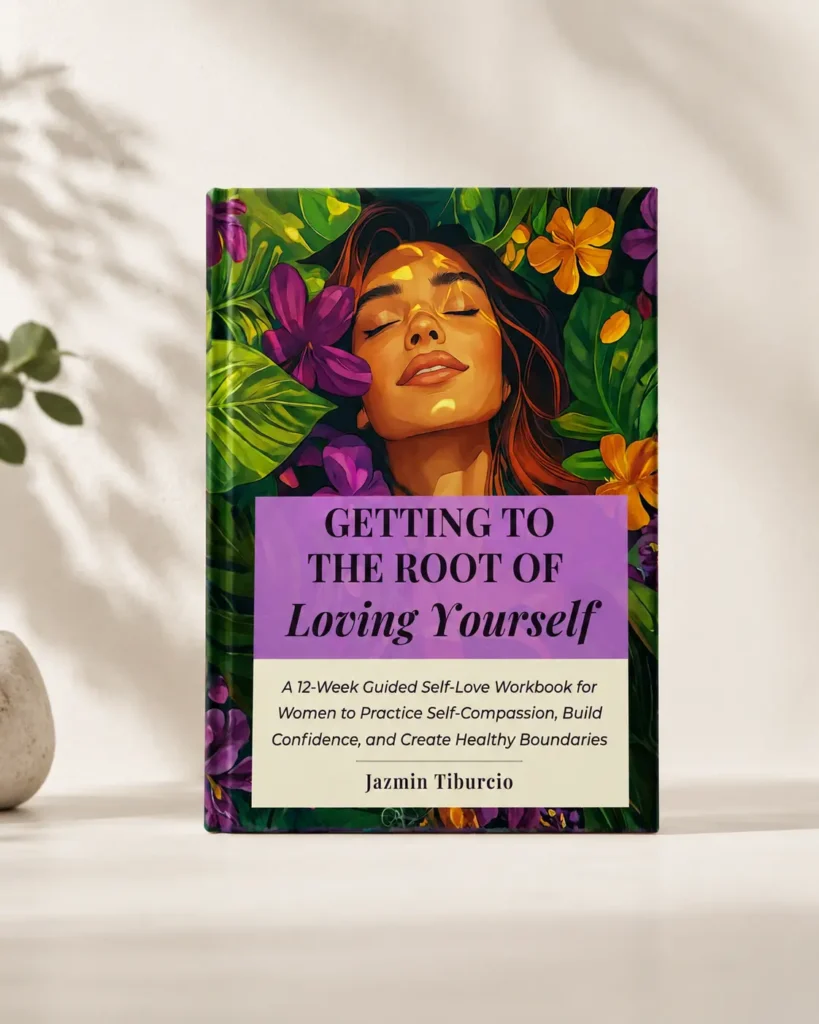
GUIDED SELF-LOVE WORKBOOK
Getting to the Root of Loving Yourself
A 12-week guided self-love workbook for women designed to help you practice self-compassion, build confidence, create healthy boundaries, and develop a more supportive relationship with yourself.